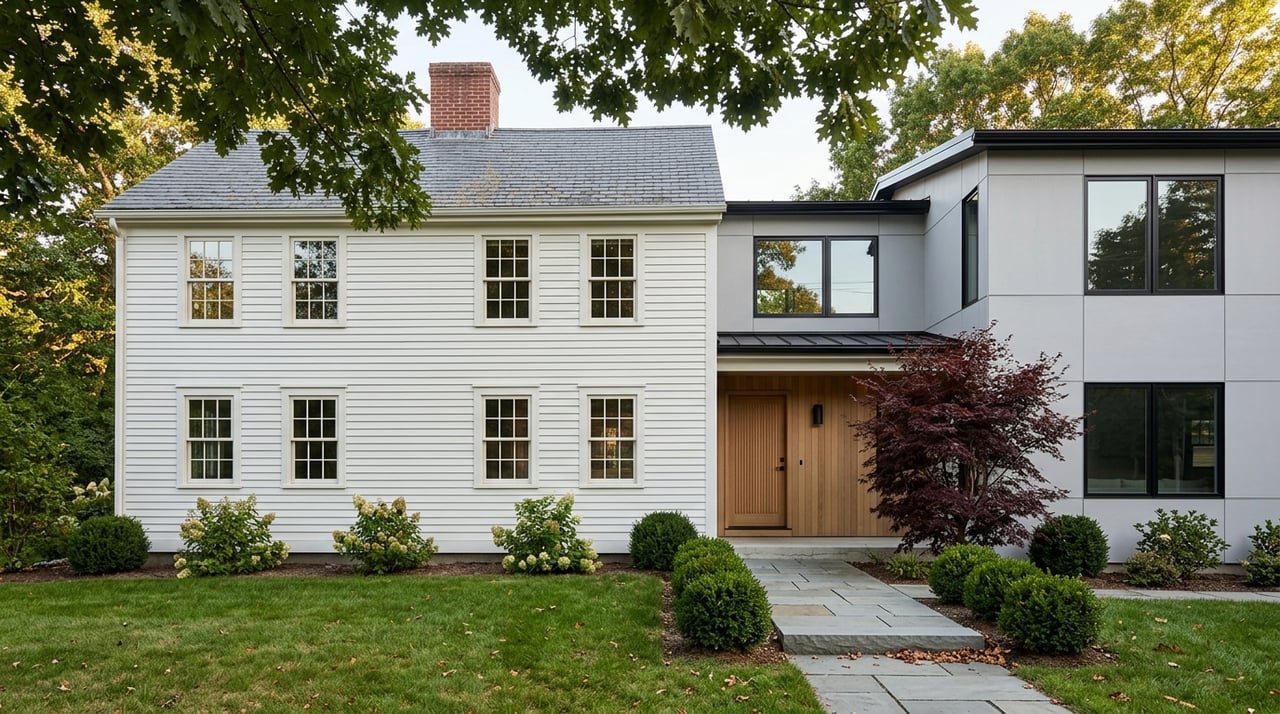
Choosing between a historic home and a newer one in Briarcliff Manor is not just about age. It is about how you want to live day to day, how much updating you are comfortable taking on, and what kind of character feels right to you. If you are weighing charm against convenience, this guide will help you understand what each option often offers in Briarcliff Manor and how to make a more confident decision. Let’s dive in.
Briarcliff Manor’s housing mix
Briarcliff Manor is not a market where “old” and “new” tell the full story. The local housing stock is best understood in three broad groups: prewar homes, postwar homes, and a smaller share of more recent construction.
That mix matters because the village is still largely a single-family market. Local profile data shows 70.6% of housing units are one-unit detached homes, 82.98% of occupied homes are owner-occupied, and the median home has 7.6 rooms. About 59.3% of homes have three to four bedrooms, which helps explain why buyers often compare lifestyle fit just as much as style.
By age, about 11.1% of homes were built in 1939 or earlier, 45.6% were built between 1940 and 1969, and 12.4% were built in 2000 or later. In other words, Briarcliff Manor offers a meaningful supply of older homes, a large share of postwar homes, and a smaller set of newer properties.
What historic homes often look like
Briarcliff Manor’s early identity was shaped by development around Walter Law and the Briarcliff Lodge. Many homes and buildings that still stand reflect that early character, which is part of why prewar homes can feel especially distinctive here.
Two architectural styles often help define the look of historic homes in the village: Colonial Revival and Tudor Revival. Each brings a different kind of presence and a different feel once you step inside.
Colonial Revival features
Colonial Revival homes often feel formal and balanced. Typical features include symmetrical facades, centered front entries, porticos or pediments, columns or pilasters, and multi-pane windows.
Inside, that design language often translates into a more traditional layout. Rooms may feel more separate and intentional, which some buyers love for privacy, quiet, and a classic sense of order.
Tudor Revival features
Tudor Revival homes usually feel more storybook and less uniform. They often include steep gable roofs, front-facing gables, half-timbering, tall narrow windows, and large chimneys.
Because the style often uses asymmetrical plans, the interiors can feel less boxy and more varied. If you are drawn to architectural personality and a less predictable floor plan, this style may appeal to you.
What postwar and newer homes offer
If you want easier everyday flow, Briarcliff Manor’s postwar and newer homes may feel more practical from the start. The village has a real postwar housing story, including the Crossroads Housing Development on North State Road, completed in 1952 for returning World War II veterans.
That era brought homes shaped around more informal living. A typical 1950s ranch often included three bedrooms, one bath, an open floor plan, an eat-in kitchen, a large living room, and more glass than many earlier homes.
Why mid-century homes appeal
Mid-century homes often strike a useful middle ground. You may get more architectural character than in some newer homes, but with a simpler footprint and more flexible living spaces than many prewar homes.
For busy households, that can be a real advantage. Informal layouts, easier circulation, and straightforward room use often make daily life feel a little more seamless.
Why newer homes may surprise you
In Briarcliff Manor, newer does not always mean ultra-modern. Village design guidelines for Renaissance Briarcliff Manor call for traditional forms such as craftsman, colonial, Tudor, farmhouse, and modern farmhouse, along with pitched roofs, dormers, and durable low-maintenance materials.
That means many newer homes are designed to feel visually in step with the village. You may find an updated interior layout and building envelope inside an exterior that still looks traditional and context-sensitive.
Layout differences that affect daily life
One of the biggest differences between historic and newer homes is not curb appeal. It is how the home functions once you move in.
Historic colonials often have more divided spaces. That can be ideal if you want formal living and dining rooms, dedicated work areas, or a home that feels more segmented.
Tudors can feel more varied and less rigid. Their asymmetrical plans often create interesting room shapes and transitions, which some buyers experience as warm and full of personality.
Mid-century homes usually lean toward informal use. Ranch layouts in particular can make it easier to keep everyone connected, and they often support flexible living in a more intuitive way.
Newer homes tend to offer the most updated version of daily function. You are more likely to find layouts shaped around current expectations for open common areas, easier flow, and move-in readiness.
Maintenance and renovation tradeoffs
Character is valuable, but so is knowing what you may be signing up for. Older homes and newer homes often come with very different maintenance profiles.
If a home was built before 1978, buyers should be aware that it is more likely to contain lead-based paint. Renovation, repair, or painting can create hazardous lead dust, so lead-safe planning matters when you are considering updates.
Older homes may also have less insulation than homes built today. A whole-house energy assessment is often the best first step if you are thinking about improving comfort and efficiency. In many cases, air sealing and insulation can make a meaningful difference, and if older windows are in good condition, efficiency upgrades may be more cost-effective than full replacement.
Newer homes usually begin from a stronger baseline for insulation and energy performance because current building codes require minimum insulation levels. For many buyers, that can mean fewer immediate projects and more predictable utility performance from day one.
Briarcliff Manor permit rules to know
Before you assume a project will be simple, it helps to understand the local process. In Briarcliff Manor, most home projects need permits.
According to the village Building Department, permits are commonly required for:
- Kitchen renovations
- Bath renovations
- Roof replacement
- Basement finishing
- HVAC replacement
- Window replacement
- Solar installations
- Additions
- Other alteration work
Additions may also require variances. For exterior changes in significant residential areas, the village’s Architectural Review Advisory Committee reviews items such as exterior features, lighting, landscaping, and signage.
Is a historic home automatically landmarked?
Not necessarily. In Briarcliff Manor, the Office of History & Archives is not a regulatory preservation commission.
That distinction matters because some buyers assume any older home will automatically face historic review restrictions. In reality, exterior design review is handled separately, so it is important to check the specifics of the property and your planned project rather than make assumptions.
Which home type fits your priorities?
The right choice usually comes down to how you rank character, convenience, budget, and time. There is no one-size-fits-all answer, especially in a village with as much architectural range as Briarcliff Manor.
If you value period detail, established character, and the idea of making thoughtful updates over time, a historic home may be the best fit. You should also be prepared for more due diligence and potentially more systems work.
If you want a practical compromise, a mid-century home may offer the sweet spot. You can often get simpler circulation, flexible living space, and some architectural personality without taking on the full complexity of a prewar property.
If your priority is move-in readiness, easier efficiency, and fewer immediate projects, newer construction may be the clearest path. In Briarcliff Manor, that does not mean giving up traditional curb appeal.
A smart way to compare homes
When you tour homes in Briarcliff Manor, try to compare them through the lens of lifestyle, not just finishes. Ask yourself how much layout matters to you, how comfortable you are with renovations, and whether you want your budget going toward upgrades or toward a more turnkey starting point.
It also helps to think beyond the first showing. A beautiful Tudor and a polished newer colonial may both be appealing, but the better choice is the one that fits your routines, your renovation tolerance, and your long-term plans.
If you want a thoughtful, local perspective on how different home styles in Briarcliff Manor line up with your goals, Valerie Cascione can help you compare options with clarity and confidence.
FAQs
What types of homes are most common in Briarcliff Manor?
- Briarcliff Manor is largely a single-family market, with 70.6% of housing units classified as one-unit detached homes, plus a mix of prewar, postwar, and newer properties.
What do historic homes in Briarcliff Manor usually look like?
- Historic homes in Briarcliff Manor often include Colonial Revival and Tudor Revival styles, with features like symmetrical facades, centered entries, steep gables, half-timbering, and prominent chimneys.
Are newer homes in Briarcliff Manor always modern in style?
- No. Newer homes in Briarcliff Manor are often designed with traditional forms such as colonial, Tudor, craftsman, farmhouse, or modern farmhouse rather than sharply modern exteriors.
Do older homes in Briarcliff Manor require more upkeep?
- Often yes. Older homes may need more attention to systems, insulation, and renovation planning, and pre-1978 homes may require lead-safe precautions during repair or remodeling work.
Do renovation projects in Briarcliff Manor usually need permits?
- Yes. The village says many common projects, including kitchen and bath renovations, roof replacement, basement finishing, HVAC replacement, window replacement, solar work, and additions, typically require permits.
Is an older home in Briarcliff Manor automatically landmarked?
- No. The village’s Office of History & Archives is not a regulatory preservation body, so an older home is not automatically landmarked just because of its age.
Which home era in Briarcliff Manor is often easiest for busy households?
- Mid-century and newer homes are often easier for busy households because they tend to offer simpler circulation, fewer immediate updates, and better baseline efficiency than many prewar homes.