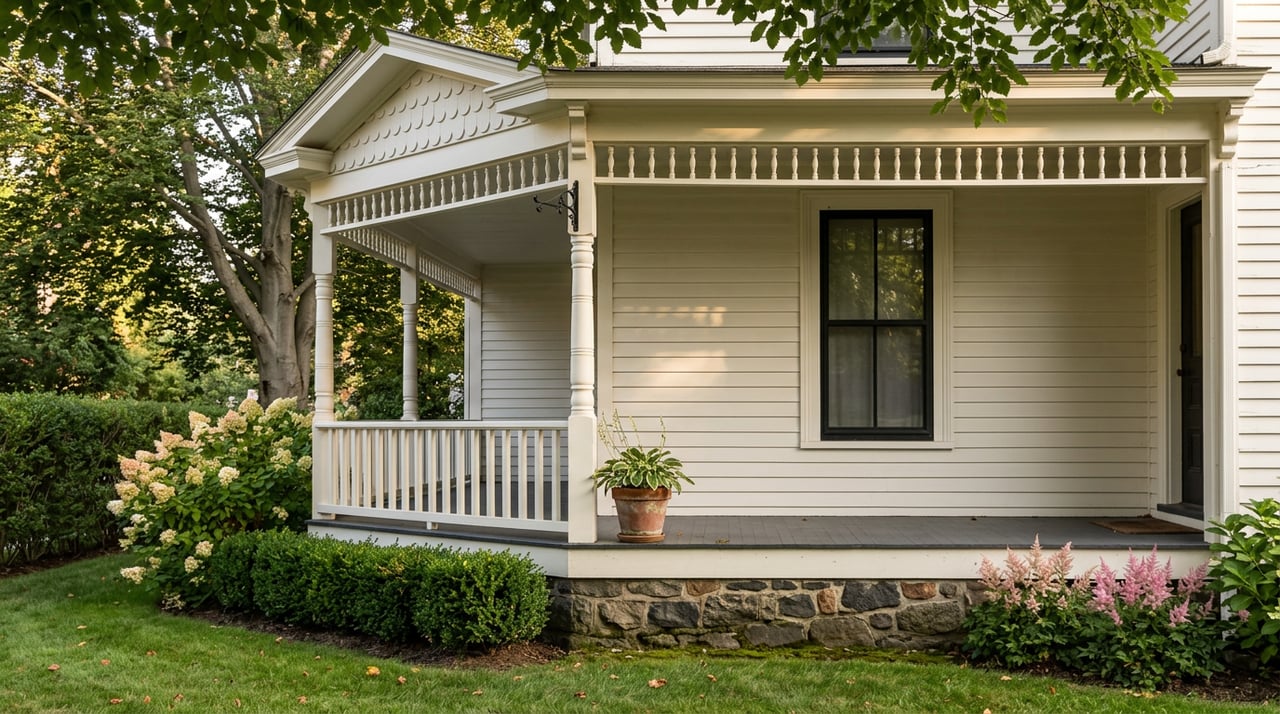
Walk down a street in Ossining's Sparta neighborhood and the houses tell a fairly consistent story: turn-of-the-century Victorians, a few converted duplexes, gingerbread trim, deep porches, the occasional glimpse of the Hudson between rooflines. It looks like one neighborhood with one set of rules. It isn't.
The question that actually determines how your renovation goes isn't "is this house historic." It's whether any of three separate Village boards has jurisdiction over your specific address, and what kind of change you're proposing. A house individually listed on the National Register of Historic Places can sit right next to one inside a local historic district, while a third house a block away, too new or too plain for either label, faces a different design test. The applicable rules can vary from address to address, and some properties may have no local design review, so buyers should check the Village maps and requirements for a specific property before planning a renovation.
The Village Runs Three Systems, Not One
The Village of Ossining's historic district maps show two local historic districts, the Sparta Historical and Architectural Design District and the Downtown Ossining Historical and Architectural Design District. Patch reports that the Village's Historic Preservation Commission grants Certificates of Appropriateness for compatible exterior alterations within locally designated historic districts.
That's separate from the Downtown Ossining National Register Historic District, and separate again from individual buildings listed on the National Register on their own. The Village of Ossining's Architectural Design Guidelines say owners of historic income-producing real property may qualify for a state or federal rehabilitation tax credit.
Then there's everything else. The Board of Architectural Review's test, set out in the Village of Ossining code, compares proposed buildings with others within 500 feet in single-family zones or 250 feet elsewhere, checking for excessive similarity or excessive dissimilarity to what's already standing.
| Designation | Who reviews exterior changes | What triggers review | What it actually controls |
|---|---|---|---|
| Sparta HADD | Historic Preservation Commission | Compatible exterior alterations | Certificate of Appropriateness review |
| Downtown Ossining HADD | Historic Preservation Commission | Compatible exterior alterations | Certificate of Appropriateness review |
| Everywhere else in the Village | Board of Architectural Review | Proposed buildings | A similarity/dissimilarity comparison to nearby buildings |
Appearance review is separate from questions about whether you can add a rental unit or change a building's use.
What a Certificate of Appropriateness Hearing Actually Sounds Like
The Historic Preservation Commission's process isn't a rubber stamp, but it isn't designed to block modernization either. A Village of Ossining Historic Preservation Commission resolution shows architect JB Hernandez of ARQ Architecture appearing before the Commission to present plans for converting a space into a laundromat, telling members the facade alterations would match the color of the existing trim on the building. No member of the public opposed the application.
That's the shape most of these hearings take: a specific, documented proposal, a conversation about materials and color rather than a wholesale redesign, and a formal resolution recorded in the public minutes. It's a real step in the process. Anyone planning exterior work on a Sparta or Downtown HADD property should build that timeline into a renovation budget the same way they'd budget for a contractor's schedule.
The Jug Tavern's Filing Highlights Financial Pressures on Historic Properties
A filing to the Village's Zoning Board of Appeals in April 2026 puts the financial side of historic ownership in plain terms. The Jug Tavern of Sparta, a circa-1760s landmark at 74 Revolutionary Road owned by a nonprofit that's operated it as a community museum since 1986, asked the Board to extend a conditional permanent use variance so it could rent out its second floor. The organization's own letter to the Board's chair states that without the extension, it would face a substantial deficit within five years, one that could put the building's future as a museum at risk.
That's not a Sparta HADD story or a Certificate of Appropriateness story. It's a Zoning Board of Appeals story, because renting space is a use question, not an appearance question. But it makes a point worth sitting with if you're looking at any of Sparta's larger or older parcels with an eye toward a garage apartment, an accessory dwelling, or income from a second unit: historic designation protects a building's appearance, not its finances. A nonprofit that has run this building as a preservation project for nearly forty years still needs a different board's approval to generate income from it.
Boundaries Move. Verify, Don't Assume.
The Village has revisited its historic district boundaries before. A public debate in 2018 centered on whether to extend historic protections to the Ellis Place neighborhood, streets just east of the Downtown Historic District with a similar collection of well-preserved early-20th-century houses, on the reasoning that they shared the same visual character as the designated district next door.
Nothing about that debate should be read as current, but it's a useful reminder that HADD lines aren't geological features. They're policy decisions the Village has changed before and could change again. A street's reputation as "the historic part of town" isn't the same as its legal designation, and the two can drift apart. The only way to know for certain which rules apply to a specific address is to check the Village's official historic district maps directly, not the neighborhood's informal name.
Before You Write the Offer
- Confirm which map your address falls on: Sparta HADD, Downtown Ossining HADD, or neither, using the Village's official historic district maps rather than the neighborhood's common name.
- Separate exterior plans from interior ones.
- If a rental unit, accessory dwelling, or second income stream from the property is part of your plan, treat it as a separate use question from exterior design review.
- If a listing mentions "National Register," ask whether that refers to an individual property listing or a district designation.
FAQ
What should I confirm before budgeting exterior work? Confirm current timelines and requirements directly with the Village of Ossining Planning Department before budgeting a project.
Does exterior color come up in a preservation review? In one Commission resolution, proposed facade alterations were presented specifically as matching the existing trim color on the building. That example shows color was part of the discussion, even though the design conversation may differ for a Victorian than for a storefront.
What does the Board of Architectural Review compare? The Board of Architectural Review uses a proximity-based comparison for proposed buildings.
Buying in a neighborhood like Sparta means falling for the porches and the river views, but the paperwork behind those details doesn't run on one clock. If you're weighing an offer on a house that might sit inside one of Ossining's historic districts, Valerie Cascione can help you confirm exactly which board has jurisdiction before you're locked into a timeline you didn't plan for. Let's talk about your next move.
This article is general information, not legal, tax or financial advice. Consult a qualified professional about your situation.